scheduling
Stop Overbooking Techs
A practical way to stop overbooking mechanics by planning technician hours, carryover, job mix, and bay constraints without starving the shop floor.
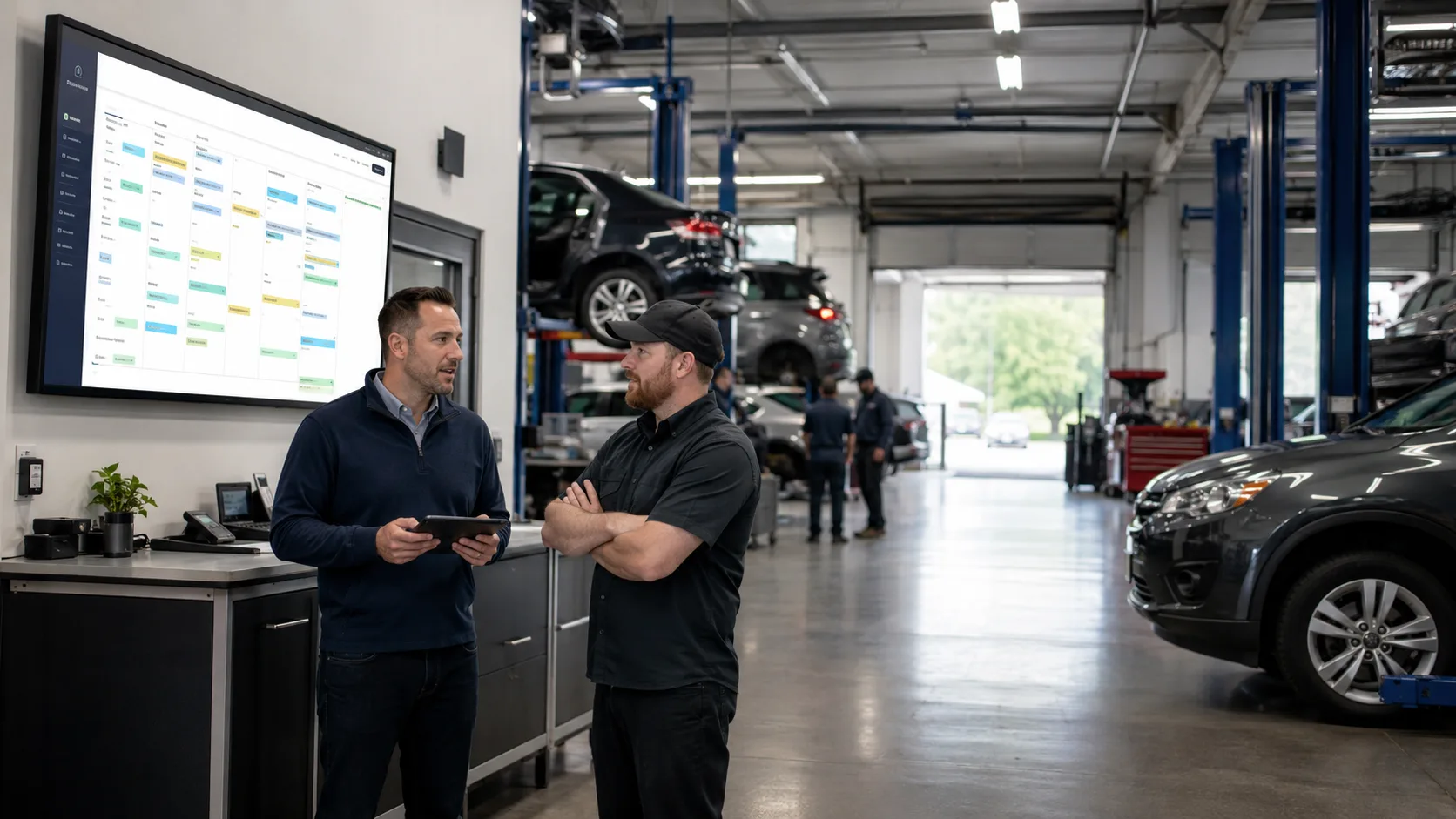
To stop overbooking mechanics, stop treating every open appointment slot as usable shop capacity. Build the day from technician hours, carryover, job mix, bay needs, parts status, and the amount of uncertainty already sitting on the floor. The goal is not to make every bay look full at 8 AM. The goal is to build a day your team can actually finish.
Overbooking usually does not feel like overbooking when the schedule is made. It feels like saying yes to reasonable work. One waiter. One diagnostic. One comeback. One job that should be easy if the part arrives by lunch.
Then the floor tells the truth.
The diagnostic needs the A tech. The waiter becomes a drop-off. The easy job turns into an approval hold. A bay gets blocked by a car that cannot move. Nobody did anything ridiculous, but by 2 PM the service writer is making apology calls and the foreman is rebuilding the day from memory.
That is the problem this article is about.
Overbooking Is a Capacity Math Problem
Overbooking mechanics is not just a calendar problem. It is a capacity math problem.
MOTOR has written about labor inventory management as the foundation for repair shop performance, including the idea that scheduling should be based on billable hours instead of vehicle count. The same article says that scheduling too many vehicles can push hours-per-repair-order down and make capacity harder to hit, while scheduling too few vehicles can leave capacity unused.
That is the balance. Too much work buries the floor. Too little work starves it.
Most shops feel that tension every day. The front counter wants enough cars to keep the team productive. The floor wants enough room to handle real work without constant firefighting. Both sides are right, but they need the same schedule to make the tradeoff visible.
The question is not, "How many cars can we fit?"
The better question is, "How many usable technician hours can we responsibly promise?"
Car Count Hides the Real Load
Car count is tempting because it is visible. Twelve cars looks busier than eight. A full lot looks like demand. A full board looks like momentum.
But car count hides the things that actually break the day:
- A diagnostic that needs your strongest tech.
- A waiter with a short promise window.
- A comeback that needs the foreman before new work moves.
- A parts-wait vehicle occupying a productive bay.
- A maintenance job that can move quickly if the right tech gets it.
- An approval hold that may become work late in the day.
MOTOR's service advisor guidance calls out the same pattern from a different angle: many shops are activity-based and take in more vehicles than they can handle. The article gives the example of technicians capable of producing 30 hours in a day while the shop takes in 30 cars, creating a very busy staff but weak hours-per-repair-order.
That is how a shop can feel packed and still underperform.
The floor is not paid for looking busy. The floor is paid for completed, approved, correctly assigned work.
Start With Usable Technician Hours
Before the day gets filled, each tech needs a realistic capacity number.
Not every clock hour is usable. Lunch, meetings, training, parts runs, customer interruptions, rechecks, comebacks, and inspection follow-ups all eat into the day. Skill mix matters too. An apprentice's available hours are not interchangeable with the diagnostic tech's hours. A tech who is strong on maintenance may not be the right person for a drivability problem that needs deeper judgment.
Start with what each tech can realistically produce today:
- Who is here?
- Who is leaving early?
- Who is tied to a specific job from yesterday?
- Who can handle diagnostics?
- Who needs simpler work to stay productive?
- Who is already overloaded before new work arrives?
That number is the top of the schedule. Everything else has to fit under it.
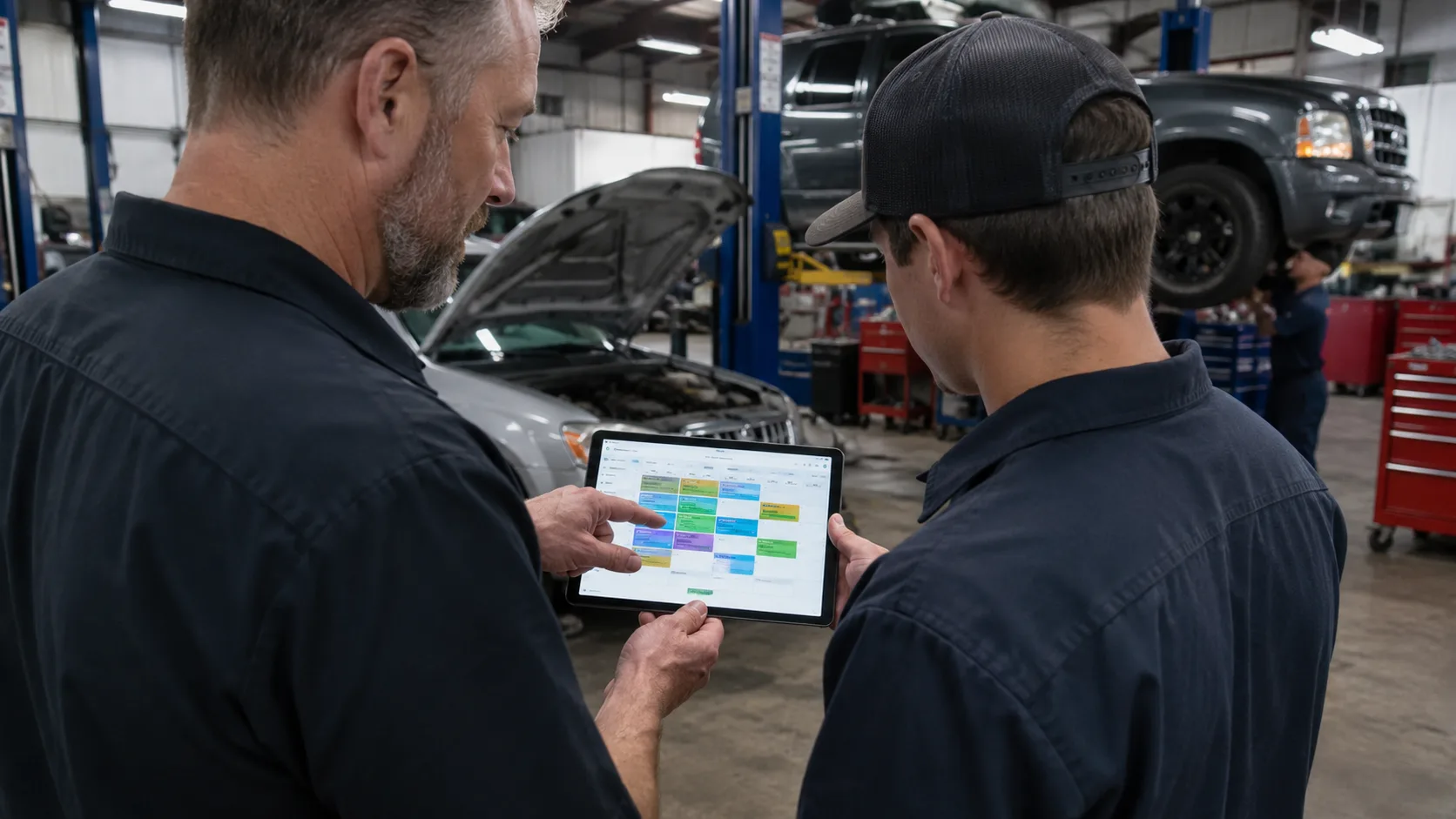
This is where a live floor schedule helps. The service writer should not have to ask three people whether the A tech can take one more diagnostic. The foreman should not have to rebuild the schedule in their head every time a customer approves work. The owner should not have to guess whether the shop is full, overloaded, or simply blocked.
Carryover Comes Before New Promises
Carryover is already booked work, even if it is not on tomorrow's appointment calendar.
If a car did not finish yesterday, it owns part of today's capacity. If it is waiting on approval, it still owns attention. If it is waiting on parts, it may own bay space. If it is torn down, it may own the lift until the next decision is made.
The mistake is treating carryover like a side note.
Before accepting new work, answer these questions for every carryover job:
- What is the next action?
- Which tech owns it?
- Does it need a bay, holding space, or specialty equipment?
- How many hours should the shop reserve?
- What customer promise is attached to it?
This is one reason the first BayBoard blog post on how to schedule an auto repair shop argues that carryover should be the first input to tomorrow's schedule. New appointments should fit around unfinished commitments, not hide them.
Separate Open Bays From Open Capacity
An empty bay is not always wasted capacity. A full bay is not always productive capacity.
A car waiting on parts can make the floor look full while doing nothing for production. A vehicle waiting on approval can block a lift while the service writer chases the customer. A comeback can sit in a bay because nobody has made the next decision.
At the same time, an intentionally open bay can protect the day.
That does not mean leaving bays empty as a habit. It means knowing why a bay is open. If the day has diagnostics, waiting customers, tow-ins, carryover risk, or late parts arrivals, one flexible bay can keep the shop moving. If the day is mostly predictable maintenance, that same bay might be better filled.
The schedule should show the difference.
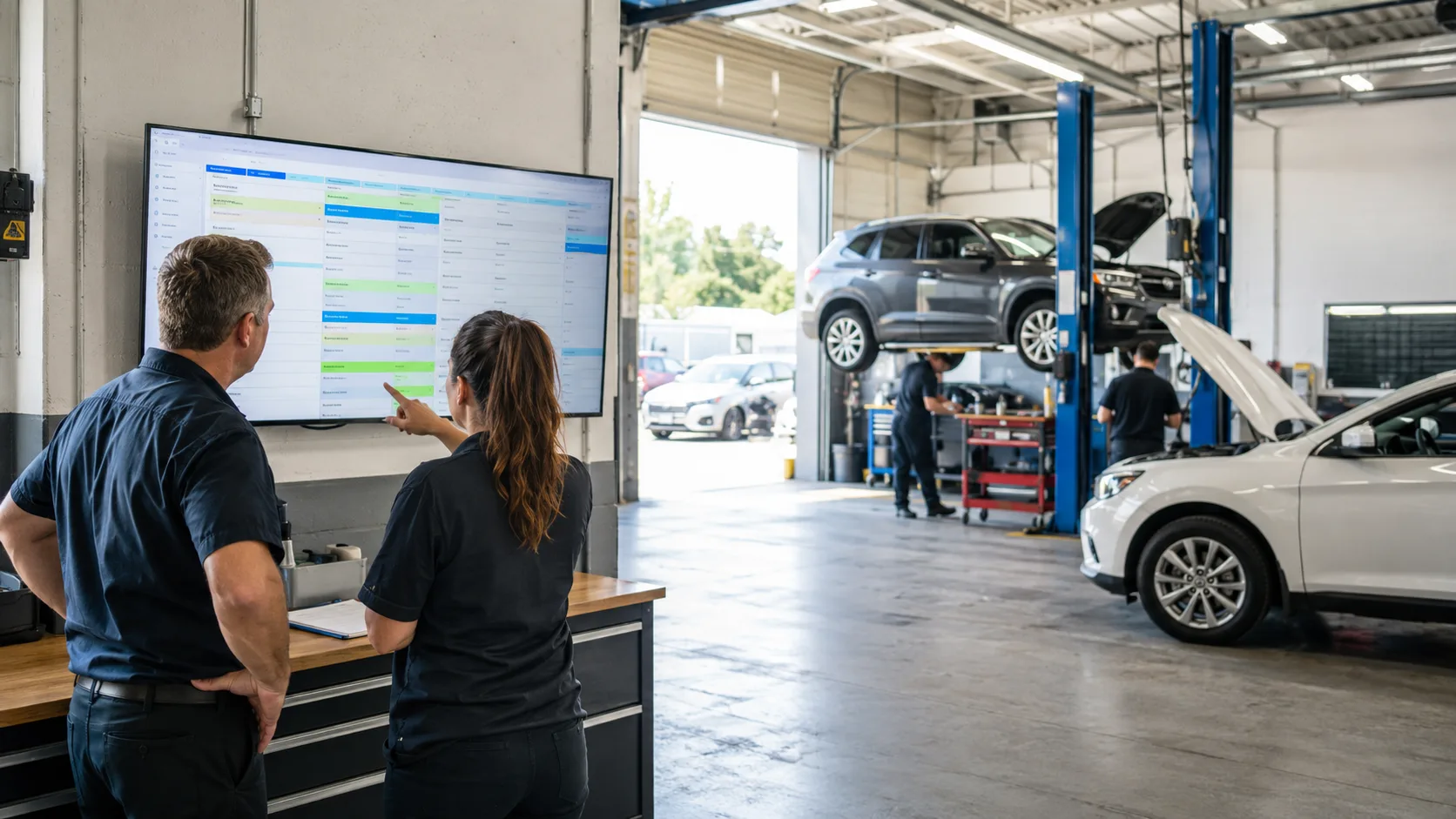
When every bay is assigned before the morning starts, the first surprise has nowhere to go. Then the shop does not just have a scheduling problem. It has a movement problem.
If the movement problem is showing up as blocked lifts, parts-wait cars, or unclear holding space, the next read is the guide to auto repair bay scheduling.
Watch the Work Mix, Not Just the Count
The same number of cars can create completely different days.
Five maintenance jobs, two inspections, and one light repair may be manageable. Five diagnostics, two waiters, and one comeback may be too much for the same team, even with the same appointment count.
MOTOR's labor inventory article specifically calls out work mix as part of scheduling, including maintenance, testing and diagnosis, and repair. The useful takeaway is simple: the mix changes how much the team can absorb.
A good schedule should make the mix visible:
- Maintenance that can move quickly.
- Diagnostics that need deeper skill and more uncertainty buffer.
- Repairs that need parts, bay time, and clean handoffs.
- Comebacks that need priority and judgment.
- Waiters that need tighter promise rules.
If the mix is hidden, the shop will overbook while the calendar still looks clean.
Give the Service Writer a Floor View
Service writers do not overbook shops because they want chaos. They overbook when the floor's real capacity is hard to see.
If the service writer only sees appointment slots, they will make slot-based promises. If they can see tech load, carryover, bay constraints, and approval risk, they can make better promises at the counter.
That matters because the service writer is often the person converting demand into commitment. MOTOR's service advisor article says advisors must balance customer demand with shop capacity, described as technician billable hours, to maximize production.
The front counter needs more than a calendar. It needs the same operational picture the foreman uses.
That shared picture protects everyone:
- Customers get promises the shop is more likely to keep.
- Technicians get work that matches capacity and skill.
- The foreman spends less time translating the day.
- The owner can see whether the floor is busy, blocked, or overloaded.
Keep The Visibility, Lose The Erasing
The whiteboard became popular because it made the day visible. That was the right instinct.
The problem is that a whiteboard depends on constant manual updates. It can show the floor if someone keeps it true, but it struggles with carryover, remote visibility, history, and fast changes. The article on repair shop whiteboard scheduling goes deeper on where that starts breaking.
The lesson is not that shops need less visibility. They need better visibility.
The schedule should show:
- Which tech owns each job.
- Which jobs are waiting on parts.
- Which jobs are waiting on approval.
- Which bays are blocked.
- Which work is at risk of carrying over.
- Which promises are most exposed.
- Which tech still has usable capacity.
If that view only lives in one person's head, the shop will keep overbooking even with good people making reasonable decisions.
Protect Capacity And Keep Work Moving
Stopping overbooking mechanics does not mean turning the shop into a museum.
You still need enough work. You still need productive bays. You still need service writers to say yes when the shop can handle the job. The point is to stop saying yes from a calendar that does not understand the floor.
A better schedule gives the team controlled capacity:
- Enough work to keep technicians productive.
- Enough buffer for diagnostics and late approvals.
- Enough bay visibility to prevent blocked movement.
- Enough carryover discipline to protect tomorrow.
- Enough shared context for the counter and floor to make the same promise.
That is the operating layer BayBoard is built for.
Your shop management system should still own customers, repair orders, estimates, invoices, inspections, parts, and customer communication. BayBoard sits next to the SMS as the live floor schedule for techs, bays, carryover, and workload visibility.
If your shop is tired of choosing between overbooking mechanics and leaving bays empty, request access to BayBoard. It gives the floor its own schedule for the space between the appointment calendar and the work actually happening in the bays.
FAQs
- How do you stop overbooking mechanics in an auto repair shop?
- Start the schedule from usable technician hours, not vehicle count. Subtract carryover, blocked time, known bay constraints, and high-uncertainty work before deciding what new work the shop can promise.
- Should a repair shop leave bays empty on purpose?
- A shop should not leave productive space idle without a reason, but one open bay can be useful when the day has diagnostics, waiting customers, tow-ins, parts delays, or carryover risk. The goal is controlled capacity, not a full-looking floor.
- Why does scheduling by car count cause overbooking?
- Car count hides labor hours, technician skill, bay needs, parts status, and job uncertainty. Ten light maintenance visits and ten diagnostics are very different days even if the appointment count looks the same.
- Does BayBoard work with my shop management system?
- Yes. BayBoard supplements the SMS. Your shop management system remains the system of record for customers, repair orders, estimates, invoices, inspections, parts, and messages. BayBoard focuses on the live floor schedule.
Want a schedule that handles the real day?
BayBoard shows technician capacity, blocked work, and carryover in one view.
Request Access
Daniel Mallatt
Founder, BayBoard / Owner, Franklynn Automotive
Daniel Mallatt runs Franklynn Automotive, a six-bay repair shop in Littleton, Colorado, and built BayBoard from the scheduling problems he sees on the floor.
Keep reading
Auto Repair Bay Scheduling
How auto repair shops should think about bay scheduling, technician capacity, blocked work, carryover, and same-day movement.
When Whiteboards Break
Why repair shops still use whiteboards for scheduling, where the board starts breaking, and what a digital shop-floor schedule has to preserve.
Schedule Your Shop Better
A practical scheduling system for auto repair shops that accounts for technician capacity, carryover, parts delays, and the 4 PM surprise.